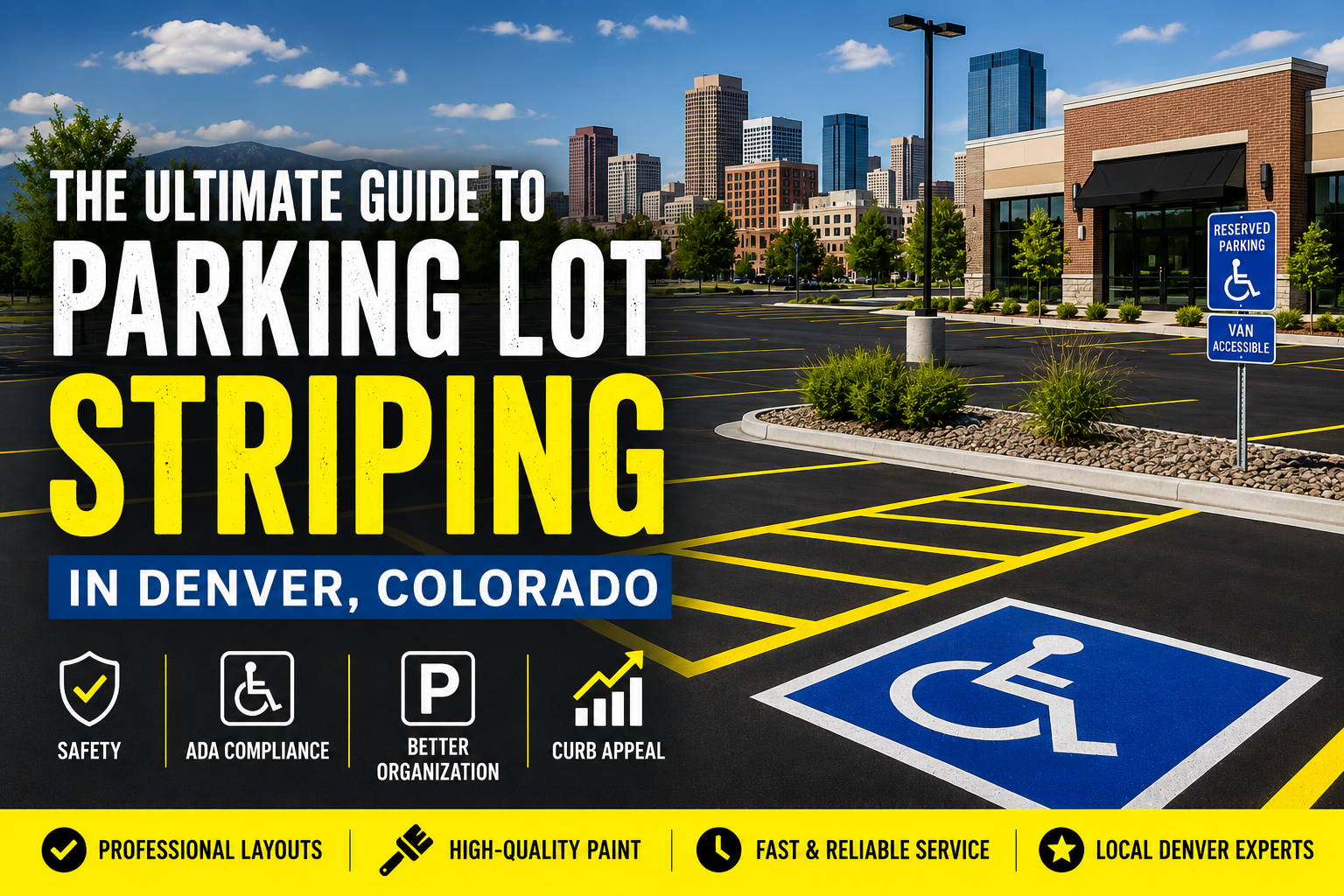
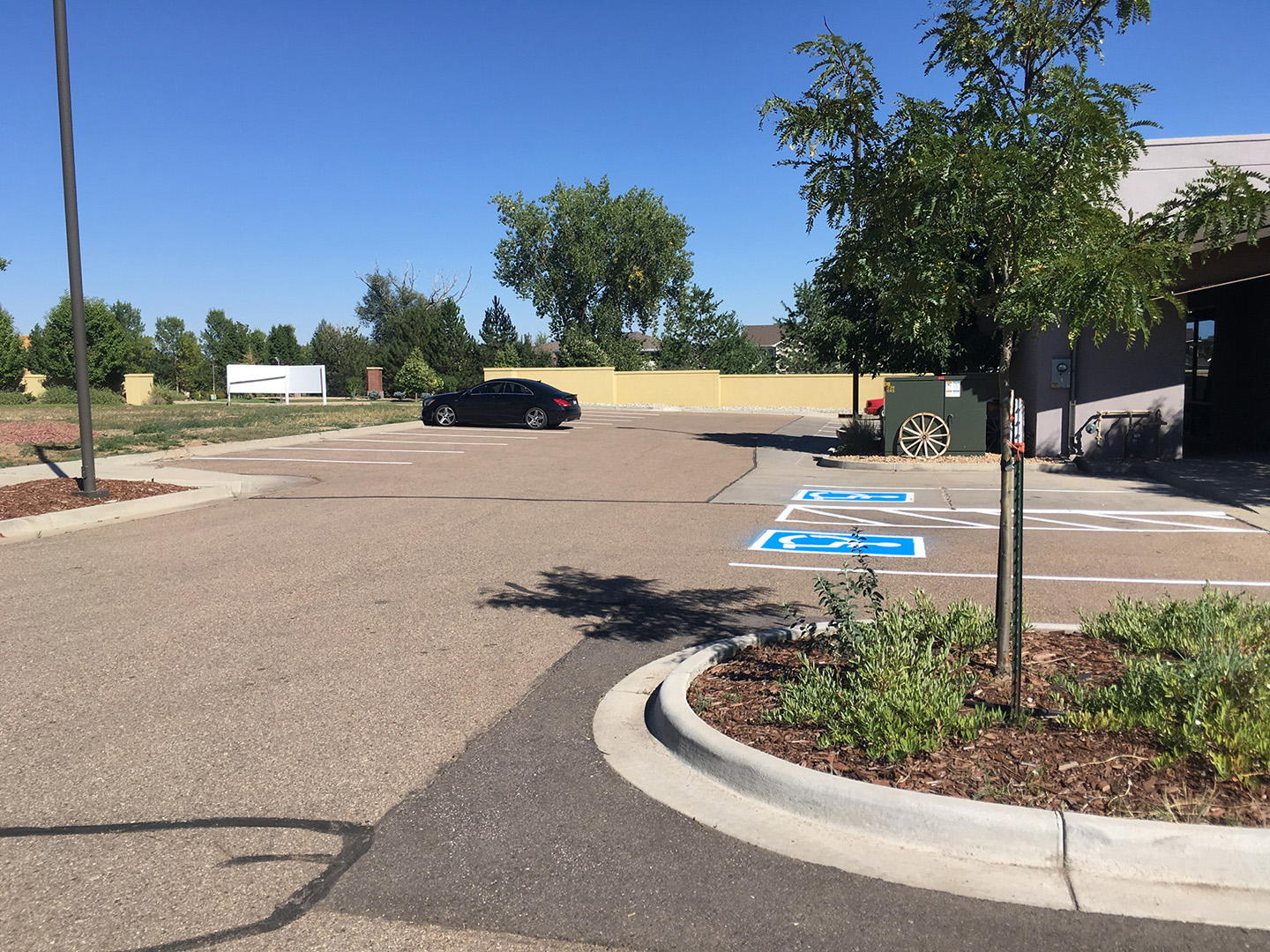
When customers arrive at your property, your parking lot is one of the first things they notice. Crisp, professionally painted parking lot stripes communicate safety, professionalism, and attention to detail. Faded striping, worn ADA markings, and deteriorated pavement markings can create confusion, increase liability, and leave a poor first impression.
At Colorado Pro Stripe, we specialize in professional parking lot striping throughout Denver and the Front Range, helping commercial property owners maintain safe, attractive, and ADA-compliant parking lots.
Whether you own a retail center, office complex, warehouse, industrial facility, HOA, apartment community, hospital, or restaurant, this guide covers everything you need to know about parking lot striping in Denver.
Why Parking Lot Striping Matters
Parking lot striping is more than simply painting lines on asphalt. A professionally striped parking lot improves:
- Safety for drivers and pedestrians
- Traffic flow
- Property appearance
- ADA compliance
- Vehicle organization
- Customer experience
- Property value
Fresh pavement markings also help maximize parking capacity while reducing accidents and liability.
Benefits of Professional Parking Lot Striping
Improve Curb Appeal
Your parking lot is part of your brand.
Customers naturally associate a clean, organized parking lot with a well-managed business.
Fresh striping instantly gives your property a cleaner, newer appearance without the cost of replacing asphalt.
Increase Parking Capacity
Professional layout design often allows more efficient parking.
Proper spacing ensures:
- Better traffic flow
- Easier parking
- Reduced congestion
- Improved emergency vehicle access
A redesigned layout can sometimes add additional parking spaces while remaining compliant with local regulations.
Improve Safety
Clearly marked parking stalls help drivers know where to park while directional arrows and crosswalks guide traffic safely throughout the property.
Important safety markings include:
- Fire lanes
- Stop bars
- Yield markings
- Speed bumps
- Crosswalks
- Loading zones
- No parking areas
These markings significantly reduce accidents and confusion.
ADA Compliance
One of the most important reasons to maintain your parking lot is compliance with the Americans with Disabilities Act (ADA).
ADA requirements include:
- Accessible parking stalls
- Van-accessible spaces
- Access aisles
- Proper signage
- Correct dimensions
- Detectable pathways where applicable
Failure to maintain ADA markings can expose property owners to complaints, accessibility issues, and legal risk.
Colorado Pro Stripe helps ensure your parking lot meets current accessibility requirements.
Services We Provide
Colorado Pro Stripe offers complete pavement marking services including:
Parking Lot Striping
Professional layout and restriping for:
- Retail centers
- Shopping malls
- Restaurants
- Hotels
- Apartment communities
- Industrial facilities
- Medical offices
- Churches
- Schools
- Warehouses
New Layout Design
Building a new parking lot?
We can design efficient layouts that maximize parking while maintaining proper traffic flow and ADA accessibility.
Restriping
Over time paint fades from:
- Snow removal
- UV exposure
- Traffic
- Rain
- Ice
- Road salt
Restriping restores visibility and improves the overall appearance of your property.
Fire Lane Striping
Clearly marked fire lanes are essential for emergency access.
We install:
- Red curb painting
- Fire lane lettering
- Fire access markings
- No parking zones
Warehouse Striping
Warehouse markings improve safety and organization by identifying:
- Forklift lanes
- Walkways
- Storage areas
- Hazard zones
- Shipping lanes
- Equipment staging
ADA Parking Stall Striping
We install:
- Accessible parking symbols
- Van accessible markings
- Access aisles
- Wheelchair logos
- ADA signage layouts
Custom Stencils
We also provide custom pavement markings such as:
- Company logos
- Reserved parking
- Visitor parking
- Customer pickup
- Employee parking
- EV charging spaces
- Numbered parking
Best Paint for Colorado Weather
Denver experiences:
- Snow
- Ice
- Heavy UV exposure
- Freeze-thaw cycles
- Summer heat
- Deicing chemicals
Because of these conditions, using high-quality traffic paint is essential.
Professional traffic paints provide:
- Better adhesion
- Longer life
- Brighter appearance
- Faster drying
- Improved durability
How Often Should Parking Lots Be Restriped?
Most commercial parking lots should be restriped every:
- 12–24 months for high-traffic locations
- 2–3 years for moderate traffic
- As needed for low-traffic facilities
Denver snow removal operations can wear markings faster, making annual inspections a smart investment.
Industries We Serve
Colorado Pro Stripe works with:
- Shopping Centers
- Retail Stores
- Grocery Stores
- Office Buildings
- Apartment Complexes
- HOAs
- Industrial Facilities
- Distribution Centers
- Restaurants
- Hotels
- Hospitals
- Medical Facilities
- Schools
- Churches
- Municipal Properties
- Government Facilities
- Fuel Stations
- Parking Garages
Why Choose Colorado Pro Stripe?
Property managers throughout Colorado trust Colorado Pro Stripe because we provide:
- Professional layouts
- Straight, crisp lines
- High-quality traffic paint
- Fast project completion
- Competitive pricing
- ADA-conscious striping
- Experienced crews
- Reliable scheduling
- Excellent communication
We understand that your parking lot represents your business.
That's why we treat every project as if it were our own.
Parking Lot Striping Process
Our process is simple:
1. Site Visit
We inspect your parking lot and discuss your goals.
2. Layout Planning
We measure and design the striping layout.
3. Surface Preparation
Old markings are evaluated, and surfaces are cleaned to promote proper paint adhesion.
4. Professional Striping
Our crews apply crisp, durable pavement markings using professional equipment and traffic-grade coatings.
5. Final Inspection
We verify alignment, dimensions, and overall quality before reopening the lot to traffic.
Common Parking Lot Markings
We stripe:
- Parking stalls
- Compact spaces
- ADA stalls
- Van accessible stalls
- Crosswalks
- Stop bars
- Directional arrows
- Fire lanes
- Loading zones
- No parking areas
- Curbs
- Wheel stops
- Speed bump markings
- Warehouse floors
- Custom stencils
Frequently Asked Questions
How long does parking lot striping last?
Most parking lot striping lasts between one and three years depending on traffic, weather, snow removal, and pavement condition.
How long before cars can drive on fresh striping?
Traffic paint typically dries quickly, but cure time varies depending on temperature, humidity, and the specific coating used. We schedule projects to minimize disruption and provide guidance before reopening the area.
Do you work after business hours?
Yes.
Many commercial projects are completed during evenings or weekends to minimize disruptions to customers and operations.
Do you remove old striping?
Yes.
We can evaluate existing pavement markings and recommend removal or modifications when redesigning parking lots or changing layouts.
Do you offer free estimates?
Absolutely.
We provide free estimates throughout the Denver metro area and surrounding communities.
Serving Denver and the Front Range
Colorado Pro Stripe proudly serves:
- Denver
- Aurora
- Lakewood
- Arvada
- Westminster
- Thornton
- Centennial
- Littleton
- Englewood
- Wheat Ridge
- Commerce City
- Parker
- Castle Rock
- Highlands Ranch
- Broomfield
- Golden
- Northglenn
- Brighton
- Louisville
- Lafayette
- Longmont
We also provide parking lot striping services throughout Colorado for commercial properties of all sizes.
Request Your Free Parking Lot Striping Estimate
Whether your parking lot needs a complete new layout, fresh restriping, ADA updates, warehouse floor markings, or fire lane striping, Colorado Pro Stripe is ready to help.
Our experienced team delivers professional workmanship, durable pavement markings, and exceptional customer service for commercial properties across Denver and Colorado.
Contact Colorado Pro Stripe today to schedule your free estimate and keep your parking lot safe, organized, and looking its best.