
Colorado Thermoplastic Services
Durable Solutions for Traffic Marking and Safety
Thermoplastic striping services play a crucial role in maintaining safety and order on Colorado’s roadways, parking lots, and public spaces. As the Centennial State continues to grow, both in population and infrastructure, the demand for highly visible, durable, and environmentally conscious pavement markings has surged. Thermoplastic striping meets these needs, offering longevity, adaptability to diverse climates, and a range of customization options suitable for Colorado’s unique conditions.
What is Thermoplastic Striping?
Thermoplastic striping is a pavement marking solution made from a mixture of plastic polymers, pigments, glass beads, and fillers. When heated to high temperatures, this blend liquefies and can be precisely applied to asphalt or concrete surfaces. Upon cooling, the material hardens into a thick, durable, and highly reflective line, symbol, or marking.
Key Characteristics:
- Durability: Thermoplastic has a longer lifespan than traditional painted lines, often lasting up to 5–7 years in moderate traffic conditions.
- Visibility: Embedded glass beads enhance reflectivity, making markings visible day or night and in adverse weather.
- Quick Setting: Thermoplastic cools and sets rapidly, allowing for minimal disruption to traffic and quick project turnaround times.
- Customizable: Thermoplastic striping can be tailored to any specification, from basic lines to custom logos and crosswalks.
Why Choose Thermoplastic for Colorado?
Colorado’s climate presents unique challenges—ranging from scorching summers to snow-packed winters, with rapid temperature changes and frequent freeze-thaw cycles. Thermoplastic’s robust composition makes it especially well-suited for these conditions.
- Weather Resistance: Thermoplastic is engineered to resist Colorado’s ultraviolet radiation, deicing chemicals, and moisture, reducing fading and wear even in harsh mountain conditions.
- Enhanced Safety: The reflectivity of thermoplastic lines improves driver awareness, especially in low-light or snowy conditions common in Colorado’s high country.
- Cost-Effectiveness: While initial installation costs are higher than traditional paint, the longevity and reduced maintenance requirements of thermoplastic result in lower lifecycle costs for municipalities and property owners.
Common Applications in Colorado
Thermoplastic striping is used throughout Colorado for various applications, including:
- Highways and Roadways: Centerlines, edge lines, lane delineations, arrows, turn bays, and bike lanes.
- Intersections: High-visibility crosswalks, stop bars, advance warnings, and directional arrows.
- Parking Lots: Stall markings, ADA compliance symbols, fire lane marking, and customer-specific graphics.
- School Zones: Durable “SCHOOL” legends, speed limit signs, and pedestrian crossings to ensure safety for children.
- Multi-Use Trails and Recreational Areas: Lane division, directional guidance, and custom logos for parks and trails.
The Thermoplastic Application Process
The process of thermoplastic striping involves specialized equipment and trained technicians:
- Surface Preparation: The pavement must be clean, dry, and free of oil or debris. For older or oxidized surfaces, a primer may be applied to ensure optimal adhesion.
- Material Heating: Thermoplastic material is heated in a pre-melter to approximately 400°F (204°C) until fully liquefied.
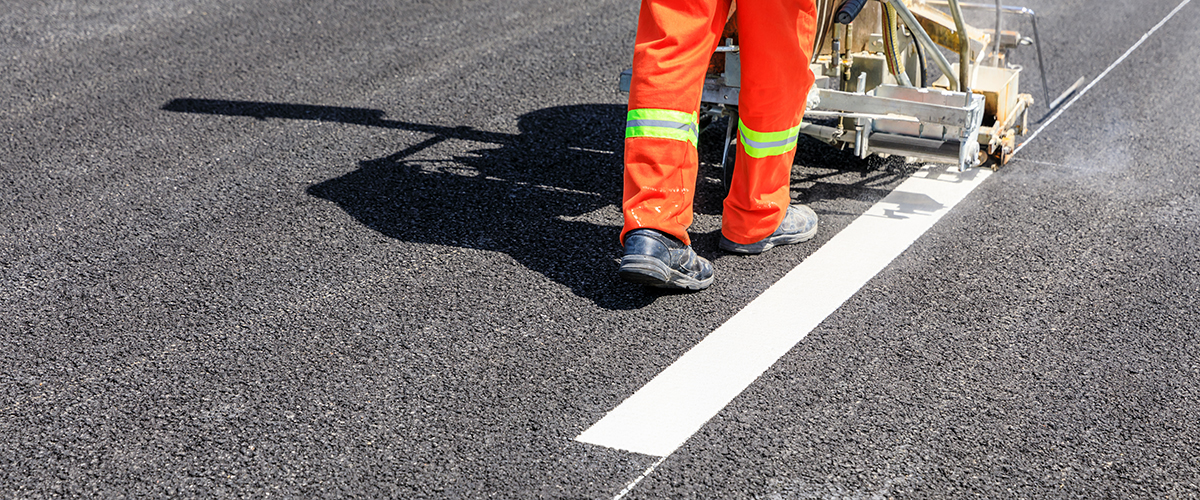
- Application: The molten thermoplastic is applied using walk-behind stripers, hand molds, or truck-mounted units, depending on the scale of the project.
- Glass Bead Broadcasting: Glass beads are often added during or immediately after application to maximize reflectivity.
- Cooling and Curing: The material sets within minutes, quickly forming a solid, wear-resistant marking.
- Inspection: Technicians verify that all markings meet local and federal regulations for width, thickness, and reflectivity.
Maintenance and Longevity
One of the greatest advantages of thermoplastic striping in Colorado is its resilience. Properly installed thermoplastic can last several years, even under heavy traffic and harsh weather. However, periodic maintenance is recommended to ensure optimal performance:
- Routine inspections for fading, chipping, or damage.
- Prompt repair or reapplication of damaged sections, especially after plowing or resurfacing operations.
- Cleaning to keep markings free of dirt and debris, enhancing reflectivity and visibility.
Environmental Considerations
Thermoplastic materials are considered environmentally responsible for several reasons:
- Low VOC: Unlike solvent-based paints, thermoplastic emits minimal volatile organic compounds, reducing air pollution during installation.
- Long Lifespan: Reduces the need for frequent reapplication, leading to less material use and waste over time.
- Recyclability: Some thermoplastic products incorporate recycled materials, and worn markings can be removed and recycled in some cases.
Choosing the Right Service Provider in Colorado
Given the technical demands and safety requirements of thermoplastic striping, it is important to select a qualified, experienced provider. When evaluating thermoplastic striping contractors in Colorado, consider the following:
- Experience: Providers should have a track record of successful projects in Colorado’s varied environments, from urban streets to mountainous highways.
- Certifications: Ensure that technicians are trained in thermoplastic application and familiar with state and federal guidelines for traffic markings.
- Equipment: The provider should use modern, well-maintained machinery capable of precise, uniform application.
- Safety Protocols: Contractors must adhere to strict safety procedures to protect workers and the public during installation and maintenance.
- Customization: Look for a company that offers tailored solutions, including custom logos, unique colors, or specialty markings for schools, businesses, or municipalities.
- References: Ask for references or case studies of previous work to assess quality and reliability.
Case Study: Thermoplastic Striping for Colorado Highways
Imagine a section of Interstate 70, Colorado’s vital east-west artery, undergoing resurfacing. The Colorado Department of Transportation (CDOT) specifies thermoplastic striping for new lanes and crosswalks due to its proven longevity and resistance to weather extremes. A certified striping team prepares the roadway, applies reflective thermoplastic markings, and ensures that the lines remain bright and intact through snow, ice, and summer heat. The result is improved safety and reduced maintenance costs for years to come.
Innovations in Thermoplastic Striping
The field of thermoplastic striping continues to evolve, with new advances aimed at further enhancing safety, durability, and sustainability:
- Preformed Thermoplastic: Pre-cut shapes and symbols that can be quickly positioned and heat-applied, ideal for complex designs or rapid installations.
- High-Performance Glass Beads: Enhanced reflectivity beads improve visibility, especially in foggy or wet conditions often encountered in Colorado’s mountain passes.
- Eco-Friendly Formulations: Manufacturers are developing thermoplastics with recycled content or plant-based polymers, reducing environmental impact.
- Color Customization: Advances allow for a broader palette, from vibrant bike lanes to custom business logos or school mascots.
Frequently Asked Questions (FAQ)
- How long does thermoplastic striping last in Colorado? Typically, 5–7 years depending on traffic volume and weather exposure. Mountain highways or roads subjected to snow plows may experience faster wear, but thermoplastic still outperforms most paints.
- Is thermoplastic safe for the environment? Yes; it emits low VOCs and can incorporate recycled materials. Its durability also means fewer applications and less waste.
- Can thermoplastic be applied year-round? For best results, installation is usually scheduled between late spring and early fall, when surfaces are dry and temperatures are above 50°F (10°C).
- Is thermoplastic more expensive than paint? Initial costs are higher, but long-term savings are realized through reduced maintenance and longer service life.
- What colors are available? Standard colors (white, yellow) are common, but custom colors are available for specialized uses.
Conclusion
Thermoplastic striping service is a smart investment for Colorado property owners, municipalities, and agencies committed to safety, durability, and sustainability. Whether for highways winding through the Rockies, bustling city streets, or community parking lots, thermoplastic markings stand up to Colorado’s toughest conditions while providing clear, bright guidance to motorists, cyclists, and pedestrians alike. By choosing an experienced provider and the right materials, you can ensure that your pavement markings remain effective and attractive for many years to come.